
In a world where phone batteries seem to drain faster than a kid at a candy store, understanding battery life is more crucial than ever. Picture this: you’re out and about, ready to capture the perfect sunset, but your phone’s battery icon is flashing red like it’s auditioning for a horror movie. Not exactly the Instagram moment you had in mind, right?
Understanding Phone Battery Life
Understanding phone battery life is essential for effective device management. Awareness of factors influencing battery performance helps users avoid unexpected drain.
What Affects Battery Life?
Several factors affect battery life. Screen brightness plays a crucial role; higher brightness consumes more energy. Background apps use power even when not in active use. Device age also matters; older batteries typically hold less charge. Signal strength impacts battery drain; weaker signals force the phone to work harder. Settings such as location services, notifications, and widgets impact overall consumption.
Common Battery Technologies
Rechargeable lithium-ion batteries dominate the market. These batteries offer high energy density, allowing for compact designs. Lithium polymer batteries provide flexibility in shape but slightly less energy density. Nickel-cadmium batteries, though less common today, feature durability and reliability. Each technology has unique attributes that cater to different user needs. Understanding these options aids in selecting devices that fit specific usage preferences.
Tips to Extend Phone Battery Life
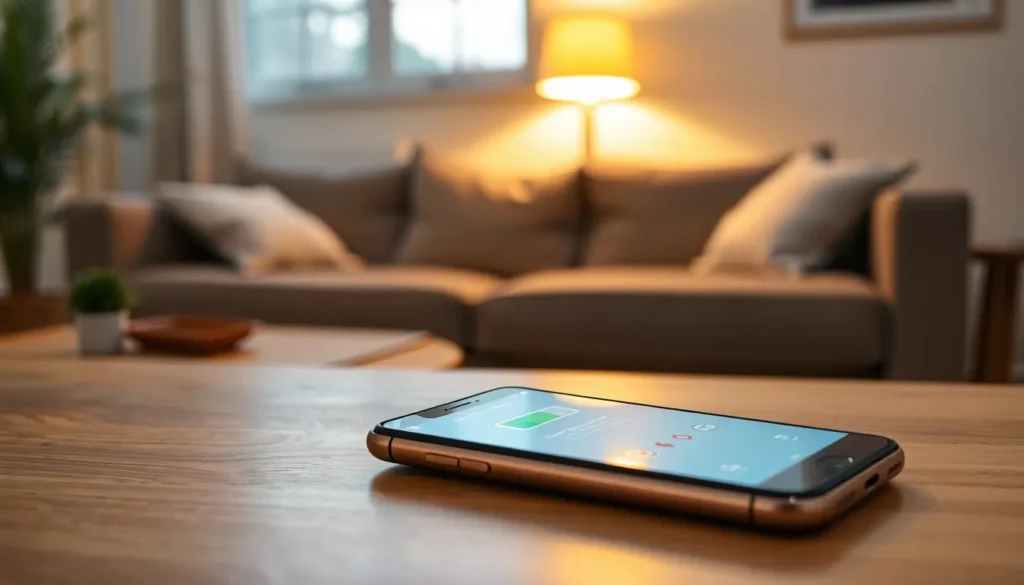
Improving phone battery life demands practical strategies, making daily use more efficient. Simple adjustments can significantly reduce battery drain.
Adjusting Settings
Lowering screen brightness improves battery longevity. Enabling battery saver mode conserves power by limiting background activity. Turning off location services when not in use prevents unnecessary energy consumption. Disabling Bluetooth and Wi-Fi helps save battery during periods of inactivity. Closing unused apps running in the background also reduces energy usage. Adjusting these settings daily can lead to longer battery life.
Battery-Saving Apps
Several battery-saving apps optimize power efficiency. These applications monitor usage patterns to identify power-hungry processes. Some popular choices include Greenify, which hibernates background apps, and AccuBattery, providing detailed battery health insights. Users can automate power-saving features with built-in tools available on most devices. Maintaining an eye on app activity enhances understanding of battery consumption. With frequent updates, these apps adapt to user habits, ensuring optimal battery performance.
Measuring Phone Battery Life
Measuring phone battery life involves understanding specific metrics and conducting real-world tests. These methods help users grasp how their devices perform under various conditions.
Battery Life Metrics
Battery life metrics provide quantifiable insights into performance. Common metrics include standby time, talk time, and screen-on time. Standby time reflects how long a phone lasts without active use, while talk time indicates how long users can converse on a call. Screen-on time measures active usage during tasks like gaming or video playback. These metrics offer users a clearer picture of battery longevity based on everyday activities and assist in managing expectations.
Real-World Testing
Real-world testing plays a crucial role in evaluating phone battery life. Different scenarios impact battery drainage, such as streaming videos, browsing the web, or using social media apps. Users often find value in conducting tests that gauge performance against specific tasks. For example, running a dedicated video playback test can reveal how long a charge lasts during continuous streaming. Rigorous testing across multiple scenarios delivers practical insights into a device’s daily performance and exposes potential issues affecting battery efficiency.
Trends in Phone Battery Technology
Innovations continue to shape the landscape of phone battery technology, enhancing overall performance and user experience.
Advances in Battery Capacity
Battery capacity growth has become a focal point in phone design. Manufacturers are integrating higher-capacity cells, often exceeding 4,000 mAh for flagship models. This improvement directly correlates with longer usage times, allowing users to engage in activities like streaming and gaming without frequent recharging. Additionally, innovations in battery chemistry, including the use of solid-state batteries, promise even greater energy density and safety. As capacities increase, users find their devices meet the demands of heavier applications and multitasking more effectively.
The Rise of Fast Charging
Fast charging technology has transformed the way users recharge their devices. Many smartphones now support charging speeds of 50W or higher, dramatically reducing down-time. Devices can achieve up to 70% charge in as little as 30 minutes, providing convenience for users on the go. Manufacturers employ various methods, such as improved power delivery protocols and optimized charging circuits, to expedite the charging process. This trend reflects a strong consumer preference for minimal interruption and efficient power replenishment, allowing users to focus on their daily tasks rather than battery anxiety.
Understanding phone battery life is crucial for maximizing device performance and enhancing daily experiences. By being aware of the factors that influence battery efficiency and implementing practical tips, users can significantly extend their phone’s longevity.
With the rapid advancements in battery technology and the introduction of fast charging options, staying informed about these developments helps users make better choices. Regularly assessing battery performance through real-world tests can provide valuable insights into individual usage patterns.
Ultimately, a proactive approach to managing battery life not only ensures seamless connectivity but also enriches the overall smartphone experience.


