
In a world where virtual cats can be more popular than your real dog, gaming technology continues to evolve at lightning speed. Emerging technologies in gaming are no longer just a fantasy, they’re a reality that could redefine how we play, interact, and experience digital realms. Buckle up for a wild ride through the latest trends that are shaking up this vibrant industry, from immersive virtual worlds to the magic of artificial intelligence. Let’s immerse.
Virtual Reality And Augmented Reality
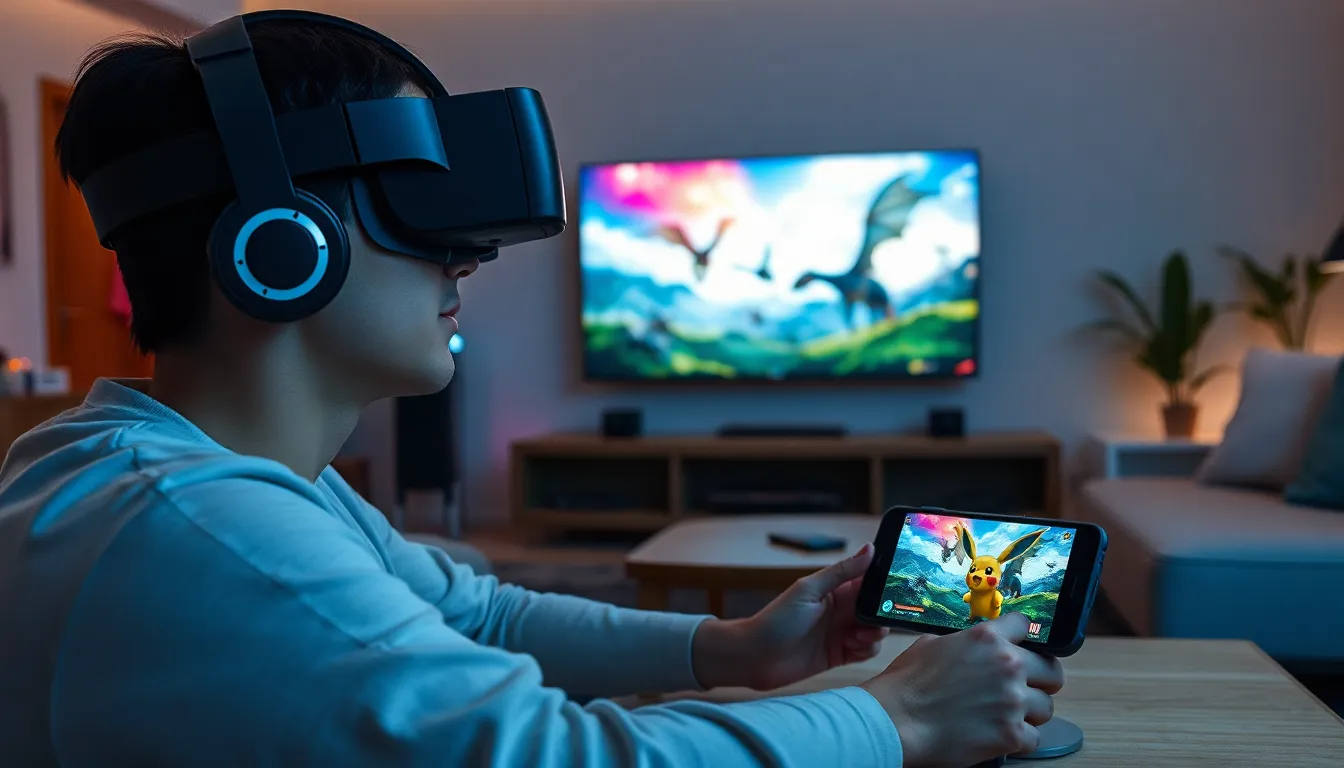
Virtual Reality (VR) and Augmented Reality (AR) have become household names, transforming the way gamers engage with their favorite titles. VR headsets now offer fully immersive experiences, allowing players to step into digital worlds like never before. Imagine slaying dragons as if they were standing right next to you. On the flip side, AR integrates digital elements into the real world, enhancing gameplay without completely isolating players from their surroundings. Think about Pokémon GO: it revolutionized how people explore their neighborhoods while hunting for virtual creatures. Just when you thought your couch was the ultimate gaming seat, technology said, “Hold my beer.” The combination of VR and AR is paving the way for extraordinary storytelling and player interaction.
Impact Of AI And Machine Learning
Artificial Intelligence (AI) and Machine Learning (ML) have started to weave themselves into the very fabric of gaming. They’re not just for creating challenging NPC opponents anymore: they’re revolutionizing game design and player experiences. Adaptive AI can learn player behavior, adjusting difficulty levels on the fly for a personalized experience. Picture this: you get hooked on a game, and every time you die, the game learns from your mistakes to give you customized tips. It’s like having your own personal gaming coach. Also, AI-driven algorithms help developers analyze player data to create better, more engaging content. It’s a win-win for gamers and creators alike.
Blockchain And Cryptocurrency In Gaming
Blockchain and cryptocurrency are making waves outside of finance and into the gaming world. Players can now own in-game assets securely thanks to blockchain technology. Imagine having verifiable ownership of rare skins, weapons, or game characters. With the rise of non-fungible tokens (NFTs), players can buy, sell, or trade their digital assets on various platforms, turning gaming into a new investment opportunity. Some games even reward players with crypto for completing tasks or achieving goals, merging entertainment with real financial gain. It brings a whole new meaning to ‘pay-to-win’, let’s call it ‘play-to-earn.’ As this technology matures, the potential for gamers to capitalize on their skills will only grow.
Cloud Gaming And Game Streaming Services
Cloud gaming is another trend that’s hard to ignore. Gone are the days when players needed hardcore consoles or expensive high-end PCs to enjoy the latest games. With services like Google Stadia, NVIDIA GeForce NOW, and Xbox Cloud Gaming, players can stream games directly to their devices without the hefty hardware costs. All that’s needed is a stable internet connection. Imagine hopping from Fortnite on your console to a graphic-intensive RPG on your tablet, all without the fuss of downloads or installations. The allure of instant play and accessibility is making gaming more democratized, enabling anyone with an internet connection to join the fun.
Enhanced Graphics And Realism Through Ray Tracing
Graphical enhancements, particularly Ray Tracing, have ushered in a new era of realism in video games. Lighting, shadows, and reflections have never looked so realistic, elevating everything from blockbuster titles to indie gems. Gamers can now immerse themselves in lifelike environments where the sunlight filters through leaves, creating beautiful scenery that’s as stunning as it is playable. Ray Tracing technology pushes graphical fidelity to an entirely different realm, and it’s quickly becoming the new standard for next-gen gaming. For developers, this means newly unlocked artistic potential to create breathtaking worlds with unparalleled detail.
Future Trends And Predictions
What does the future hold for the gaming industry? Predicting trends is always a gamble, but several technologies are gaining traction. The rise of 5G connectivity can enable even more immersive cloud gaming experiences thanks to reduced latency. Combine that with AI-driven storytelling that responds to player choices, and it could feel like stepping into a true interactive movie. Further, the emergence of virtual economies tied to cryptocurrencies will transform how gamers view ownership and trade. Several industry experts speculate that VR will become much more mainstream, perhaps as common as traditional consoles. The barriers for entry are lowering and, as these technologies intertwine, the line between gaming and reality may blur even further.


